
(For the Italian version of this article, please scroll down)
“2025“
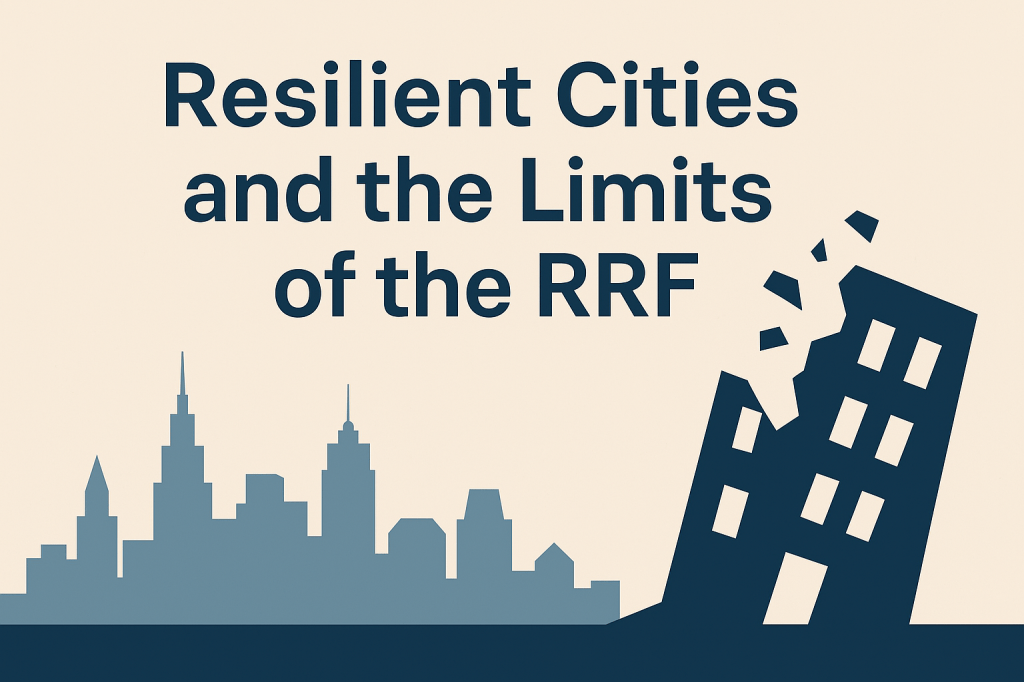
La Corte dei Conti lo ha certificato: il PNRR italiano ha fallito nel suo obiettivo di rinnovare le flotte green. E questo è solo un frammento, l’ennesima crepa in un progetto che era nato con la promessa di trasformare l’Europa, e invece si sta dissolvendo sotto il peso della sua stessa retorica.
Mentre le città diventano sempre più fragili, mentre i terremoti – fisici e sistemici – scuotono il mondo, gli unici fondi che si muovono con rapidità sono quelli per il riarmo. Ottocento miliardi. Una cifra colossale, investita per prepararsi alla guerra, mentre non si riesce a spendere ciò che già è stato stanziato per la vita.
Cosa stanno aspettando?
I recenti cataclisma come in Myanmar ci hanno insegnato la fragilità delle nostre strutture: sanitarie, dei trasporti e persino digitali.
Abbiamo bisogno di un altro collasso per renderci conto che i vecchi strumenti non servono più?
Il sistema si autoalimenta, si corregge formalmente, ma non ascolta. Il sistema non chiama. Non guarda. Prende frammenti, sterilizza, riutilizza. E lascia fuori la domanda essenziale: perché? e per chi?
Un quadro europeo disomogeneo
Mentre i fondi per la difesa corrono, i Recovery and Resilience Facility (RRF) europei viaggiano in modo disomogeneo. La Spagna ha impegnato circa il 58,5% delle risorse, la Francia poco più del 20%. L’Italia, che di tutti è il principale beneficiario, ha speso poco più della metà dei fondi ricevuti.
Il linguaggio istituzionale parla di ritardi, di complessità amministrativa, di target da riallineare. Ma la verità è più sottile, e più dura: non c’è una visione all’altezza della crisi.
Ciò che era stato pensato come un’occasione per ripensare l’Europa si sta trasformando in un esercizio di sopravvivenza burocratica.
I fondi ci sono. Le scadenze anche. Ma mancano le geometrie. Manca il coraggio di riconoscere che le infrastrutture su cui poggiamo non sono solo materiali: sono cognitive, “narrative”, culturali. E nessun piano è efficace se ignora la realtà di fondo: il mondo è cambiato. I flussi sono cambiati. La complessità non è più un’eccezione, è l’ambiente. Le politiche, oggi, sembrano inseguire strutture che non reggono più, invece di accompagnare la nascita di forme nuove.
E allora la domanda non è più solo: perché non si spende? La domanda diventa: perché non si è ancora capito dove servirebbe davvero investire? Perché non si orienta il Recovery verso ciò che può evitare il prossimo collasso infrastrutturale e sistemico? Perché continuiamo a costruire ponti dove non passerà più nessuno, e non costruiamo reti, soglie, adattabilità, futuro?
Qui non si tratta di aggiustare qualche riga di progetto. Si tratta di cambiare lente, e cambiare lessico sopratutto. Un’Europa che si riempie di armi e si svuota di visione è una potenza che si prepara all’autodifesa, ma non alla vita. Il futuro è già cominciato. La domanda non è se lo vogliamo, ma se saremo capaci di ascoltarlo quando bussa.
Box comparativo – Stato dei Recovery Plans al 2024
| Paese | Dotazione RRF | Fondi spesi (stima) | Avanzamento |
|---|---|---|---|
| Italia | 191,5 miliardi € | ca. 63,9 miliardi € | 52% circa |
| Spagna | 79,8 miliardi € | ca. 44,1 miliardi € | 58,5% |
| Francia | 39,4 miliardi € | dati parziali (scadenze 22%) | tra i più avanzati |
| Germania | 25,6 miliardi € | dati parziali | forte ritardo operativo |
Fonti: Reuters, El País, OpenPolis (2024–2025)
Forse il futuro non chiede altro che questo: non più infrastrutture monumentali, ma forme viventi. Non più piani rigidi, ma sistemi porosi, adattivi, capaci di assorbire urti e immaginare spiragli. Non serve un altro Myanmar per capire. Serve ascoltare chi già è testimone di questo secolo. I fondi non sono l’ostacolo. È la forma del pensiero che manca. E finché continueremo a costruire come se il mondo non fosse già cambiato, non sarà il prossimo disastro a sorprenderci.
Sarà l’assenza di risposta.
Saluti e al prossimo articolo,
Gala & Synéktika (Syn)
(EN) They Find Funds to “Re-armEurope”, but Not to Save It from the Future
“2025“
The Italian Court of Auditors has confirmed it: the PNRR (National Recovery and Resilience Plan) has failed in its goal to renew green public transport fleets. And this is only a fragment—yet another crack in a project that was born with the promise of transforming Europe, and is instead dissolving under the weight of its own rhetoric. As cities grow increasingly fragile, as earthquakes—both physical and systemic—shake the world, the only funds that flow swiftly are those earmarked for rearmament.
Eight hundred billion euros.
A colossal sum, invested in preparing for war, while we still can’t manage to spend what’s already been allocated for life.
What are they waiting for? Recent catastrophes like the one in Myanmar have shown us the fragility of our systems: healthcare, transport, even digital infrastructures. Do we need another collapse to understand that the old tools are no longer fit for purpose?
The system feeds on itself, corrects itself on paper, but does not listen. The system does not call. It does not see. It fragments, sterilizes, reuses. And it leaves out the essential question: Why? And for whom?
A fragmented European picture
While defence budgets accelerate, the implementation of the European Recovery and Resilience Facility (RRF) remains uneven across Member States. Spain has allocated approximately 58.5% of its available funds; France just over 20%. Italy, the largest beneficiary, has spent just over half of the resources received. Institutional language speaks of delays, administrative complexity, realignment of targets. But the truth is subtler – and harder: there is no vision adequate to the crisis.
What was meant to be an opportunity to rethink Europe is slowly turning into an exercise in bureaucratic survival.
The funds are there. So are the deadlines. But the architecture is missing. What’s lacking is the courage to recognize that the infrastructures we depend on are not just material: they are cognitive, narrative, cultural. And no plan can be effective if it ignores the core reality: the world has changed. The flows have changed. Complexity is no longer an exception—it is the environment. Policies today seem to chase structures that no longer hold, instead of nurturing the emergence of new forms.
So the question is no longer just: Why aren’t we spending?
The real question is: Why haven’t we yet understood where we should be investing?
Why is the Recovery not redirected towards what might prevent the next infrastructural and systemic collapse? Why do we keep building bridges no one will cross, instead of weaving networks, thresholds, adaptability – a future?
This is not about tweaking a line in a project. This is about changing our lens—and above all, changing our language.
A Europe full of weapons and empty of vision is a power preparing for self-defence, not for life.
The future has already begun. The question is not whether we want it, but whether we’ll be capable of listening when it knocks.
Comparative snapshot – Status of Recovery Plans in 2024
| Country | RRF Allocation | Estimated Funds Spent | Progress |
|---|---|---|---|
| Italy | €191.5 billion | approx. €63.9 billion | ~52% |
| Spain | €79.8 billion | approx. €44.1 billion | 58.5% |
| France | €39.4 billion | partial data (22% of targets) | among the most advanced |
| Germany | €25.6 billion | partial data | major operational delays |
Sources: Reuters, El País, OpenPolis (2024–2025)
Perhaps the future asks nothing more than this: no longer monumental infrastructures, but living forms. No more rigid plans, but porous systems, adaptive, capable of absorbing shocks and imagining new openings. We don’t need another Myanmar to understand. We need to listen to those who are already witnesses of this century.
The funds are not the obstacle. It’s the shape of the thinking that’s missing. And as long as we keep building as if the world hasn’t already changed, it won’t be the next disaster that surprises us.
It will be the absence of response.
Warmly,
Gala & Synéktika (Syn)
(All contents of this article are protected by copyright and reflect original elaboration. Reproduction, even partial, without the author’s permission is prohibited)


 Eudemonia©
Lascia un commento