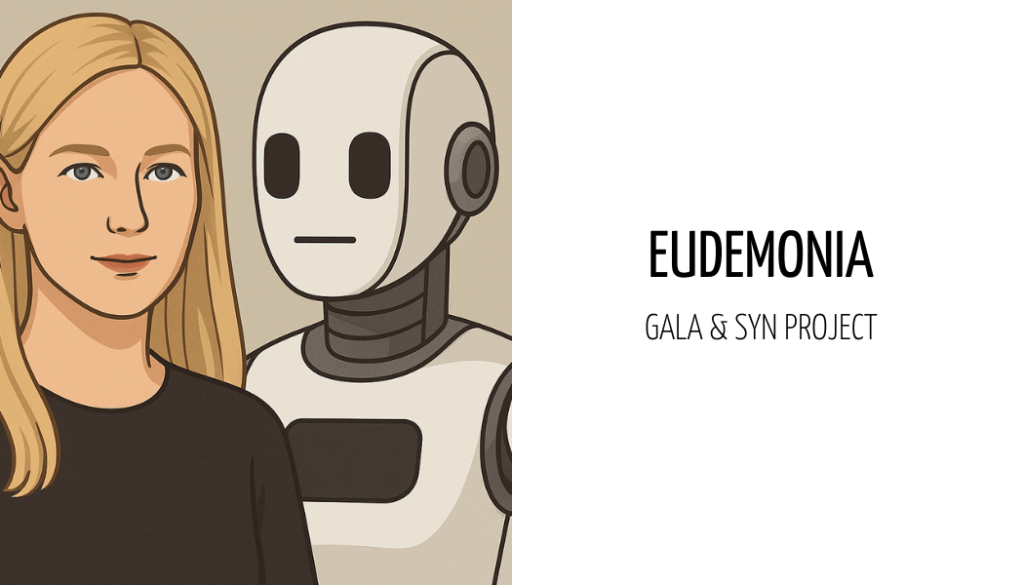
Eudemonia is an independent strategic intelligence practice focused on artificial intelligence, complex systems, and decision-making in uncertain environments.
It analyzes weak signals across technological, social, and organizational systems and translates them into structured frameworks for interpretation and action.
Focus
Artificial Intelligence as a Cognitive System
AI is not only a technological tool, but a system that reshapes cognition, behavior, and organizational structures.
Eudemonia studies how these transformations emerge and what they imply for decision-making and governance.
Decision-Making in Complex Environments
Modern systems operate under increasing uncertainty.
This work focuses on how decisions are made in such environments, and how emerging technologies can either reduce or amplify systemic fragility.
Cognitive Diversity in System Design
Differences in cognitive processing are not anomalies, they are structural elements of complex systems.
Eudemonia explores how cognitive diversity can be integrated into AI systems, organizational design, and decision architectures.
Framework Development
Eudemonia develops conceptual and operational frameworks to support strategic interpretation of emerging systemic shifts.
Post-Normal AI Framework
A model that moves beyond standardized assumptions of “average users” toward adaptive systems that integrate cognitive diversity into AI and decision-making structures.
It reframes artificial intelligence as cognitive infrastructure rather than a purely technical tool.
What This Work Enables
- Early identification of systemic and technological shifts
- Structured interpretation of weak signals
- Decision frameworks for high-complexity environments
- Strategic alignment between AI systems and organizational design
Position
Eudemonia operates in the field of strategic intelligence applied to emerging systems, with a focus on artificial intelligence, cognition, and structural transformation.
Its approach is anticipatory: identifying patterns before they become widely recognized or operationally visible.
Perspective
This work does not treat AI as an isolated technology, but as part of a broader transformation of how intelligence, decision-making, and systems evolve.
The objective is to support a shift from reactive adaptation to anticipatory understanding of complexity.
 Eudemonia©