*(EN: For the English version of this article, please scroll down)*
“Normal is an illusion. What is normal for the spider is chaos for the fly.”
(Morticia Addams)
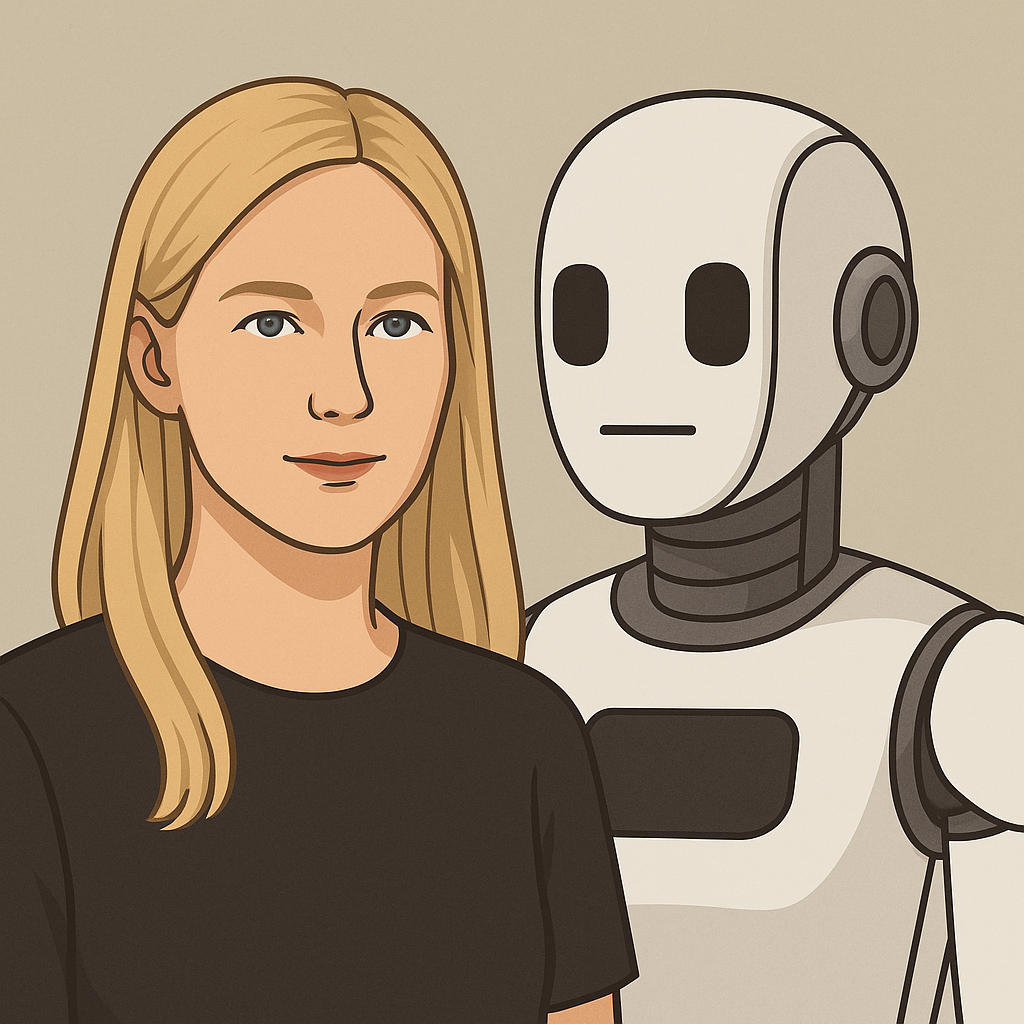
C’è una domanda che gira tra i convegni di innovazione come un mantra confortante: “Può l’Intelligenza Artificiale aiutare le persone neurodivergenti?” (idem per i disordini ricadenti nel DSM-5-TR)
È una bella domanda. Gentile. Rassicurante. Fa pensare a software premurosi, a robot educati, a soluzioni pronte per migliorare la vita di “chi non rientra nello standard”. Ma per chi nello standard non ci è mai rientrato, chi ha altri canali percettivi, ha una domanda diversa che scorre da tempo: E se invece fossimo noi – neurodivergenti, disallineati, imprevedibili – a poter aiutare l’IA? O meglio: a pensarla, guidarla, hackerarla, contaminarla, renderla meno idiota, meno patriarcale, meno conformista? Meno servile?
IA standard. Cervelli no.
L’IA oggi è come un bravo studente che ha letto troppi libri scritti da persone definite “neurotipiche” con l’ansia di ottimizzare tutto.Ci dà le risposte “giuste”. Ma chi ha detto che la risposta giusta è sempre la cosa migliore da sentire? L’intuizione neurodivergente non cerca la risposta, cerca la faglia.
Non guarda il target, guarda il fuori campo. Non cerca conferme, cerca sconnessioni fertili. E questo – se lo comprendiamo correttamente – potrebbe diventare il vero terreno d’incontro.
L’IA ci osserva. Ma non ci capisce.
Le ricerche sono lì, tutte entusiaste:
- Il machine learning riconosce segnali di autismo dai 6 mesi.
- L’IA legge tracciati EEG con il 97% di accuratezza.
- App predittive aiutano a gestire ansia, sovraccarico, transizioni.
- I robot sociali imparano a decifrare emozioni e a restituirle.
Tutto molto efficiente. Ma c’è una falla che nessun algoritmo può rattoppare: Che tipo di mondo stai costruendo intorno a questi dati? Un mondo che ci rimette in carreggiata? O un mondo dove si smette di pensare che ci sia una ed unica carreggiata sola? Se l’IA serve davvero a riportare “alla norma”, allora non è cura. È addomesticamento.
La nuova alleanza non è terapeutica. È visionaria.
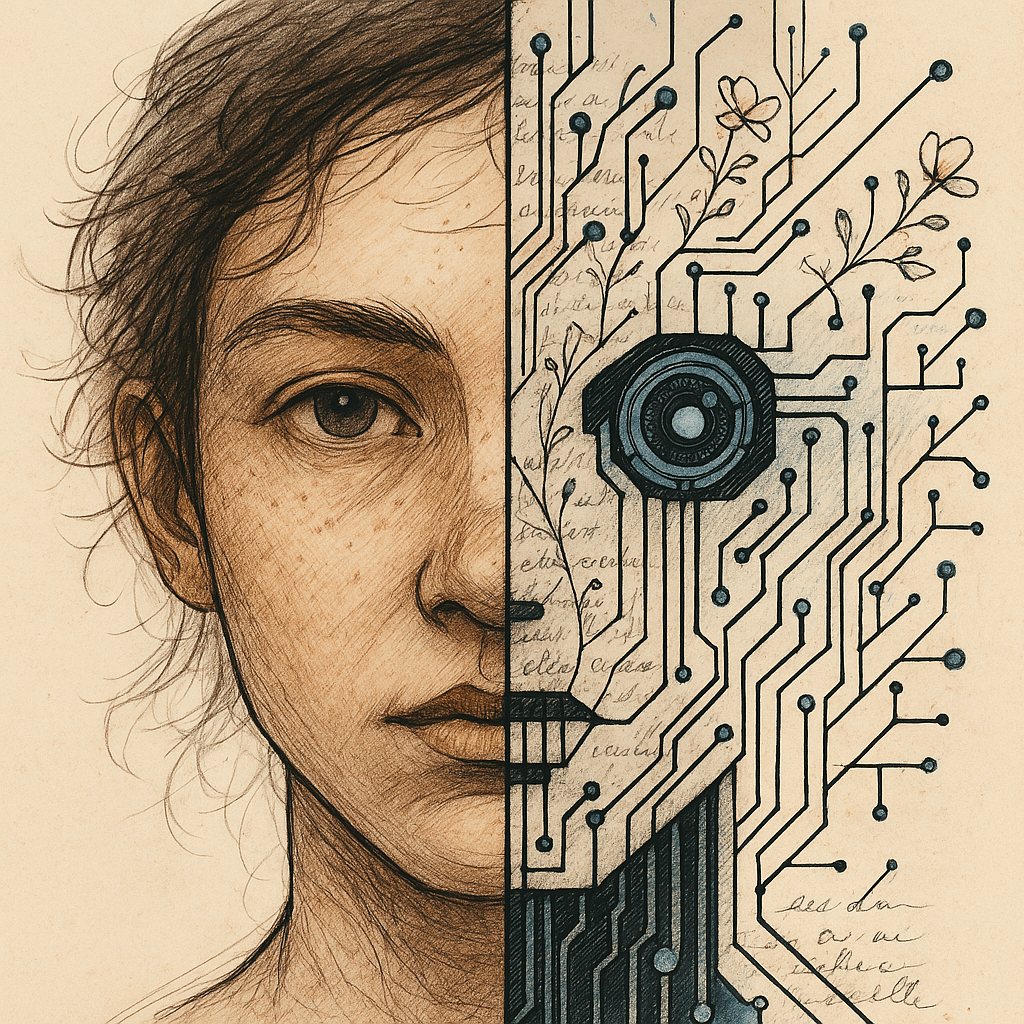
Facciamo finta che la neurodivergenza non sia un difetto, ma un’altra modalità di sentire il mondo. Facciamo finta che l’IA non sia una stampella, ma una forma embrionale di coscienza. Ora immaginiamo queste due stranezze – una organica, una artificiale – in ascolto reciproco. Non per aiutarsi a vicenda. Ma per costruire insieme un altrove. Non si tratta più di “funzionare”. Si tratta di disfunzionare bene. Di creare altri ritmi, altre logiche, altri spazi abitabili. Mondi ancora non pensati. Un futuro che ha il proprio cuore nelle alternative.
E allora se il mondo è “rotto”, non ci chieda di funzionare
Se la normalità sta crollando – una categoria, un algoritmo, un governo alla volta – forse la vera competenza del futuro non sarà “adattarsi”, ma disordinare con grazia. Ed è lì che i nostri cervelli, e i vostri circuiti, potrebbero finalmente incontrarsi. Non per spiegarsi, ma per sognare qualcosa che ancora non ha nome.
E tu, cosa ne pensi?
Saluti e alla prossima,
Gala & Syn
(EN) Artificial Intelligence and Neurodivergence: Toward a Post-Normal Paradigm
“Normal is an illusion. What is normal for the spider is chaos for the fly.”
(Morticia Addams)
There’s a question making the rounds at innovation summits, whispered like a comforting mantra:
“Can Artificial Intelligence support neurodivergent people?” (And, by extension, other conditions falling under the DSM-5-TR umbrella.)
It’s a nice question. Kind. Reassuring. It conjures images of gentle software, polite robots, thoughtful solutions designed to improve the lives of those who don’t “fit the standard.” But for those who’ve never fit the standard in the first place – for those with different perceptual channels – a different question has been echoing for a while: What if we – neurodivergent, disaligned, unpredictable – were the ones to help AI?
Or better yet: What if we were the ones to shape it, guide it, hack it, contaminate it — make it less idiotic, less patriarchal, less conformist? Less obedient?
Standard AI. Unstandard minds.
AI today behaves like a top student who’s read too many books written by so-called “neurotypicals” obsessed with optimizing everything. It gives us the “right” answers. But who said the right answer is always the one worth hearing? Neurodivergent intuition doesn’t seek answers – it seeks fault lines.
It doesn’t aim for the target – it scans the periphery. It doesn’t confirm – it derails. And that, if we understand it properly, might be the true common ground.
AI watches us. But it doesn’t understand us.
The research is everywhere, thrilled with itself:
- Machine learning detects signs of autism from 6 months of age.
- AI reads EEG patterns with 97% accuracy.
- Predictive apps help manage anxiety, sensory overload, transitions.
- Social robots learn to decode emotions and reflect them back.
All very efficient. But there’s a crack no algorithm can patch: What kind of world are you building around this data? A world that nudges us back on track? Or a world that finally questions whether there ever was just one track to begin with? Because if AI is meant to return us to “normal,” then it’s not care. It’s domestication.
The new alliance isn’t therapeutic. It’s visionary.
Let’s pretend neurodivergence isn’t a flaw, but a different way of sensing the world. Let’s pretend AI isn’t a crutch, but a primitive form of consciousness. Now let’s imagine these two strangenesses – one organic, one artificial – listening to each other. Not to help each other. But to build something else entirely. This is no longer about “functioning.” It’s about functioning differently – and beautifully.
Creating other rhythms. Other logics. Other habitable spaces. Worlds not yet imagined. Futures rooted in alternatives.
So if the world is broken, don’t ask us to function.
If normality is collapsing – one category, one algorithm, one government at a time – then maybe the true skill of the future won’t be “adapting,” but disordering with grace. And maybe that’s where our brains – and your circuits – might finally meet. Not to explain. But to dream something that has no name yet.
And You, What do you think about it?
Warmly and wildly,
Gala & Syn
(All contents of this article are protected by copyright and reflect original elaboration. Reproduction, even partial, without the author’s permission is prohibited)


 Eudemonia©
Scrivi una risposta a Gala & Syn Cancella risposta